Pages

Showing posts with label capitalization. Show all posts

Wednesday, October 2, 2019

Online activities and opportunities: Work in progress

The short (16 slide) presentation embedded in this blog post represents on-going endeavours mainly to recover from a massive setback in online resource curation. In a nutshell:
This presentation provides snapshots of an individual teacher's recent and ongoing professional development endeavours. It reflects problems of ICT use, mainly discontinuation of a free service for educators, and outlines strategies for addressing them with collaborative partners, tools, and venues of choice. It supplements a working paper submitted to PIGATE.
(Abstract, slide 2)


If you have comments or questions with regard either to the content of slides in that short presentation or the gist of the working paper (Beaufait, 2019) submitted to PIGATE prior to its Annual General Meeting last month (2019.09.14), please feel free to spell them out in threadable comments on this post.

Reference


Beaufait, P. (2019a). Reflection in action: An unavoidable IT transition. PIGATE eigo jugyou gaku kenkyuu-kai kiyou, 26 [English language teaching action research group working papers, issue 26], 32-42.

[164 words]

Friday, July 12, 2019

The Beaufait Collaboratoire: A Google Site

A Google Site that I'm using to reconstitute bits and pieces of new and previous online endeavours, the Beaufait Collaboratoire, grew new pages and subpages today.
Snapshot of The Beaufait Collaboratoire Home page
Home page snapshot, 2019.07.12

Most notable was a new Educators' Corner, now a ProDev subpage. Other additions included a couple of Google Forms for surveys of EnglishCentral (EC) users that I have embedded in EC subpages. I'd linked to the forms previously from the Tech. Tools page to replace old wiki resources.

Please feel free to browse the Collaboratoire, and let me know in comments on this post if you have any questions or discover any incipient web rot (faulty links).

As I continue to build and update that site, I'm seeking a communication interface to include there. Something like the threaded comment functionality of Blogger blogs might be ideal. In the meantime, I welcome your suggestions in comments here.

[146 words]

Tuesday, February 26, 2019

Introducing the EIGO app


Introducing the EIGO app

A guest post by Mr. Robert Hirschel*


About the app.

The Japanese Ministry of Education, Culture, Sports, Science and Technology (MEXT) has been promoting various English education initiatives to coincide with the Tokyo Olympics in 2020. New English curricula will see 5th and 6th grade elementary school students nationwide studying English as a mandatory subject with double the previous number of allocated classroom hours. Third and 4th grade students nationwide will study English as an ungraded foreign language activity. To be sure, many school districts and individual schools have already made significant increases in the provision of English education for their students.

Alongside these reforms, however, there is concern that many current and future elementary school teachers may lack sufficient proficiency and/or confidence to most effectively lead students in English language activities. Our app (see: Project team members, below) is an attempt to help teachers learn, practice, and become confident in speaking very basic classroom English language.

As we were already using the Moodle Learning Management System (LMS) at our institution, we decided to use this platform to create both a website and an app. We applied in 2014 for a MEXT grant and were awarded funds to begin our project in the following year. The process began with a needs analysis. We made observations at several elementary schools, recording and transcribing teachers’ use of Japanese and English. Based on analysis of this data and current teaching resources, we determined what language would be of greatest benefit to users of our app.

The next steps involved creating, piloting and revising content. Groups of teachers, administrators, and teachers-in training (PIGATE attendees included) provided us with valuable feedback that has influenced the final product. Several computer programmers have created and adapted plug-ins specifically for our app. There have been a lot of technical hurdles to overcome, too many to note here, but we are ultimately pleased with our product.

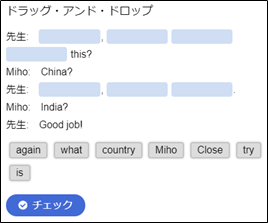
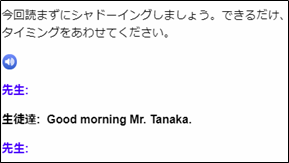
Some of the noteworthy features include animated videos with language in context, drag-and-drop interactive exercises, shadowing practice, and timed and recorded responses (see: Screen snapshots, below). Our greatest hope is that this app will be useful to teachers.


Screen snapshots
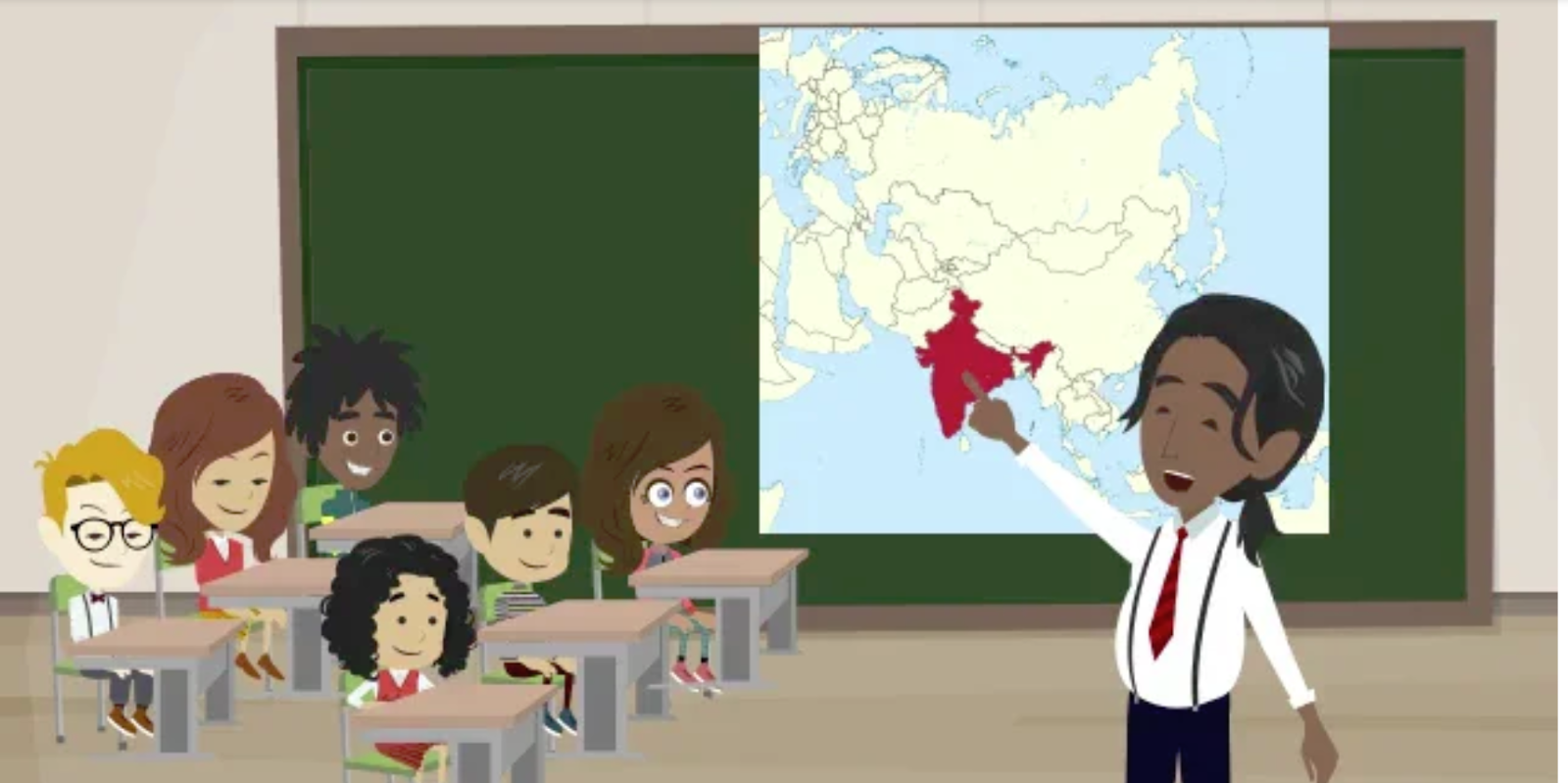
Animated videos
Drag-and-drop exercises
Shadowing practice
Timed and recorded responses


Project team members

Rob Hirschel
Jon Rowberry
Elton LaClare

About the author
Rob has had experience teaching English in elementary school, junior high school, university, and in specialized programs both in Japan and in the US. His research interests include computer-assisted language learning (CALL), vocabulary acquisition, and affective factors in the second language classroom.

Don't miss it!

Rob will be presenting the EIGO app. for elementary school English teachers at the PIGATE English language teacher development group's March Session:
  • Date: Saturday, March 9th, 2019
    • Starting at 13:30: Doors open at 13:00!
  • Venue: Seminar room 10, 5th floor,
    • Faculty of Administrative Studies office wing
    • The Prefectural University of Kumamoto (PUK)
Please see PIGATE Meeting Locations (https://goo.gl/h5DgbP) for site details and the PIGATE Calendar of Events (https://goo.gl/yEbVvo) for program details.

PIGATE_20190309

____________________
*With editorial embellishments by The PIGATE Blog administrator, Paul Beaufait

[534 words]

Wednesday, October 24, 2018

Blended Learning and Technology Integration: What's the diff.?!?

In this seven and a half minute, video Jen Jonson (2014) explained and illustrated crucial characteristics of blended learning environments. If her delivery is too fast to follow, toggling on the auto-generated transcripts at YouTube, by clicking on "..." at the foot of the display frame, and reading along may help.


[65 words]

Friday, October 12, 2018

David Ockert's slides on Self-Determination Theory (SDT)

Many thanks to David Ockert for visiting Kumamoto in September and leading a workshop on SDT for PIGATE! He granted permission to publish his slides not long after the PIGATE newsletter went to print. There are 16 plain vanilla slides (line by line builds) in the Google slideshow below.


If you have comments or questions about any of the topics in his slides, or reflections on any of the tasks that David presented last month, please feel free either to spell them out in comments on this post, or to voice them at the next monthly PIGATE gathering–this coming Saturday, 13 October, 2018.

[105 words]

Tuesday, July 31, 2018

You'll know it when you see it!

Here's an interesting presentation on a language we all know.


Tuesday, March 27, 2018

ASCD Express 9.02 - The Why, What, and When of Assessment

ASCD Express 9.02 - The Why, What, and When of Assessment (Tomlinson & Moon, 2013b)

That newsletter article caught my eye this morning in a list of website bookmarks after discussion at an English Café gathering yesterday, in which participants ... considered ... [among other topics]: 
  • Assessment practices in elementary school English-as-an-additional language learning activities slated to become mandatory coursework in the next few years (GU, n.d), and 
  • Roles of assistant or partner classroom teachers in occasional or routine team-teaching. 

The article is an adaptation of Tomlinson and Moon (2013a, pp. 19-21), in which the authors described assessment of, for, and as elements of differentiated instructionTomlinson and Moon argued for assessments to identify differences in: 
  • Individual learners' readiness to learn, 
  • Their individual interests or passions, and 
  • The learning modalities that individuals prefer (2013b, What to Assess, ¶1).

Tomlinson and Moon also outlined various types of assessment to use before, during, and after instructional units, namely: 
  • Pre-instructional assessments,
  • Formative or ongoing assessments, and
  • Summative assessments (2013b, When to Assess, ¶1).

The article concluded with examples of, and purposes for, combinations of formal and informal assessments. Regarding informal assessments in particular, Tomlinson and Moon asserted:
Informal assessments are useful in giving a teacher a sense of what makes a student tick, providing a big-picture look at how the class as a whole seems to be faring at a given moment, and amassing a growing sense of how specific students work in particular contexts (2013b, When to Assess, ¶2).
The first few examples of informal assessments that Tomlinson and Moon mentioned in their article resonated with remarks that the English Café convener made yesterday with regard to what a team teacher could do when not directly involved in instructional activities.


References


General Union [GU]. (n.d.). MEXT's 2018/2020 "New Course Of Study In Foreign Language Education" Plan. [Retrieved 27 March 2018 from] https://goo.gl/sBjXpo

Tomlinson, C. A., & Moon, T. R. (2013a). Assessment and Student Success in a Differentiated Classroom. Alexandria, VA: Association for Supervision and Curriculum Development.

Tomlinson, C. A., & Moon, T. R. (2013b). The why, what, and when of assessment. Assessment and Differentiation, 9(2). http://www.ascd.org/ascd-express/vol9/902-tomlinson.aspx

[365 [- 2 + 8] words]

Thursday, March 15, 2018

Personal and professional language development

This post displays Google slides [and references] from part two of the PIGATE gathering on March 10, 2018. The presenter's blurb for the program that day read:
In this workshop, participants will make, share, and refine self-assessments, then project and reflect on goals and resources for additional personal and professional language development.
(PIGATE meeting agendas, 2018.03.10)


To find out about what ensued, please ask one or more of the language teachers who took part, ...


... or post questions in comments on this post, where all of the participants can respond.

[88 words {+ 2}]

Wednesday, January 17, 2018

New presentation resources on the LTD Project Wiki

Here are two of three of today's additions to LTD Project Wiki, SpeakingPresenting page:

Prezi. (2017.07.05). Harvard researchers: Prezi is more engaging, persuasive, and effective than PowerPoint [weblog post]. Retrieved January 17, 2018, from https://blog.prezi.com/university-study/
  • This weblog post summarised Harvard researchers ... findings (Moulton, Türkay, & Kosslyn, 2017; above).

Prezi. (2018 [n.d.]). The science of effective presentations [webpage]. Retrieved January 17, 2018, from https://prezi.com/the-science/

  • This infographic-style web page represented Prezi-related findings summarised in Harvard researchers ... (Prezi, 2017.07.05; above).

The third addition was the research paper by Moulton, Türkay, & Kosslyn (2017).

[100{-1} words]

Wednesday, November 1, 2017

Teachers' resource book in the KGU library

One of the last times we met in the KGU library, the title on the spine of a book (Shin & Crandall, 2014) caught my eye. So I pulled it out to take a peek. It's in the syllabus corner on the first floor: 

KGU OPAC catalog listing (English)
KGU OPAC catalog listing (Japanese)
Here's a preview of the table of contents:

  • Preface
  • About the Authors
  • Chapter 1: Teaching English to Young learners around the World: An Introduction
  • Chapter 2: Basic Principles of Teaching English to Young Learners (TEYL)
  • Chapter 3: Contextualizing Instruction: Creating Thematic Units and Lesson Plans
  • Chapter 4: Teaching Listening and Speaking
  • Chapter 5: Teaching Reading and Writing
  • Chapter 6: Storytelling
  • Chapter 7: Assessment
  • Chapter 8: Classroom Management
  • Chapter 9: Twenty-First-Century Skills in Teaching English to Young Learners (TEYL)
  • Chapter 10: Professional Development
  • Worksheets
  • Index
(Source: National Geographic Learning, English Language Teaching, 
Product Information, More, Table of Contents, 
retrieved 2017.11.01)

Would you like to have a go at reviewing it for a future newsletter? If so, please send us a heads-up either in a comment on this post or in a message to our Google Group.


Reference

Shin, J. K, & Crandall, J. (2014). Teaching Young Learners English: From Theory to Practice. Boston, MA: National Geographic Learning.

[211 words]

Friday, October 6, 2017

Teachers rock–everyday!


"Better than a thousand days of diligent study is one day with a great teacher." — Japanese proverb


Quotation source: [U.S.] National Educational Association, 
Quotes about Teaching (2017.05.09)
[36 words]

Wednesday, September 13, 2017

Sesame Street: Alphabet Songs Compilation | Learn the ABCs!

At our gathering last Saturday, questions arose regarding how and when to help young English learners recognize, recall, and write letters of the alphabet.

For example, with regard to a presentation on dyslexia, participants wondered where the small letter D came from, and why it was so different from the big D.

Though I'll leave reporting details of the session to others who attended or presented, I would like to share a clue to the origin of the letter D:

Image source: Wikimedia Commons

I'd also like to point out a new video from Sesame Street (2017.09.08) offering musical alternatives to traditional ABC songs. Like most songs of this ilk, it focuses on capital letters.

What impressed me the most was the searchable transcript (lyrics) that you can display from the menu under the "..." button below the lower right corner of the YouTube video on site.

Select, "Open transcript," in the pop-up menu, then choose, "English - CC (English)," at the foot of the transcript window, for closed captions (rather than the auto-generated transcript).

Video source: Sesame Street's Back to School playlist

Below are a couple of snapshots of the transcript display with the timecode toggled either ON (at 00.01) or OFF (at 03:29 of 12:50). If you click on the images below, you can see details.

Alphabet Songs Compilation [+ transcript {00.01/12.50}]

Alphabet Songs Compilation [+ transcript {03.29/12.50}]
[255 words]

Tuesday, September 12, 2017

ICT to-dos: Map and plans

The mind map in this post points out locations of online endeavours by and for members of a grassroots language teacher development group, for various language and professional development purposes. 

Though the map itself is far from comprehensive at present, it does include both links to venues and [plenty of] to-dos (tasks with or without checkboxes) planned or envisioned in order to consolidate, extend, and facilitate ICT use by group members. 

One such purpose involves collaborative creation and publication of information to promote face-to-face group events. Others reflect collective documentation of activities, maintenance of archives, and sharing and showcasing of professional development resources. 

Tasks may be one-off, on-going, or periodic (recurring monthly or annually). Green arrows indicate connections between various tasks and other tasks or venues.

Source: Mindmeister.com

[143 {+ 2 (- 3 )} words]

Wednesday, August 30, 2017

Three helpful Google Docs features for new users (Byrne, 2017.08.28)

In the following demonstration video, Richard Byrne pointed out Google Doc interfaces for:
  1. Adjusting document layouts,
  2. Counting words and characters, &
  3. Sharing documents selectively online.


His blog is loaded with other resources and tips for educators:
[103 {+2} words]

Friday, June 30, 2017

2-Minute Tips: Smart Passwords (ConnectSafely.org)


ConnectSafely.org. (2016, October 25). 2-minute tips: Smart passwords [YouTube video]. Retrieved from https://youtu.be/e0ENHKyqRNY

Friday, May 12, 2017

Thursday, March 23, 2017

Oh, my yard! A mind map in development

The presentation that I've embedded in this post uses time-lapse screenshots to replicate several stages of mind map development. The mind map of a favorite place is a work in progress[.]


I created the mind map with FreeMind—free, open source software from SourceForge; and have continued to develop it with FreePlane—also available for free from SourceForge. The background photo in the penultimate slide, I took from my veranda on March 14, 2017.

If you have concerns or questions about mind-mapping tools; or suggestions of novel, possible, and practical uses for learning or teaching [with them]; please don't hesitate to spell them out in comments on this post.

[107 + 2 words]

Monday, March 28, 2016

Did Ford.ca get your farther–further grammar goat?


Should Ford have used the word farther instead of further for promotional displays at the Women's World Curling Championships? They definitely needn't have capitalized the F-word in their tagline, and missed out sentence final punctuation as well.


Word-choice arguments, as you might imagine, can go full circle. For starters, an Oxford Dictionaries' grammar and usage resource made no distinctions, when talking about distance; it argued, "[B]oth are equally correct."

But isn't that like arguing two stones are equally close to the center of the house? If you watched the end of semi-final play between Japan and Russia yesterday (relative time), you may recall that the Japanese team quickly conceded a second point for closeness in the house on the 10th end, and won outright with two points of their own in the 11th.

Thus, perhaps, the Oxford Dictionaries' site conceded, "... [except] in various abstract and metaphorical contexts" (http://www.oxforddictionaries.com/words/farther-or-further).

Cambridge Dictionaries Online's argument included similar nuances: "There is no difference in meaning between them," when talking about distance. However, "[t]here are some occasions when we can use further[,] but not farther. / We use further before a noun to mean 'extra', 'additional' or 'a higher level'"
(http://dictionary.cambridge.org/us/grammar/british-grammar/farther-farthest-or-further-furthest).

The Canadian Oxford Dictionary Online called farther a "var[iant] of further …" (2005, inaccessible after first viewing), but wouldn't reveal the definition of further without a purchase or subscription. The definition of one word isn't much of a sample to preview, eh?

Grammar Girl surmised, "The quick and dirty tip is to use 'farther' for physical distance and 'further' for metaphorical, or figurative, distance. It's easy to remember because 'farther' has the word 'far' in it, and 'far' obviously relates to physical distance" (http://www.quickanddirtytips.com/education/grammar/further-versus-farther).

Grammar Monster concluded, "If you're unsure which to use[,] because it's difficult to make a distinction between physical and figurative distance, opt for further" (http://grammar-monster.com/easily_confused/further_farther.htm).

You don't think Ford marketeers were unsure, do you? 

[315 words]