Pages

Showing posts with label elementary schools. Show all posts

Tuesday, February 26, 2019

Introducing the EIGO app


Introducing the EIGO app

A guest post by Mr. Robert Hirschel*


About the app.

The Japanese Ministry of Education, Culture, Sports, Science and Technology (MEXT) has been promoting various English education initiatives to coincide with the Tokyo Olympics in 2020. New English curricula will see 5th and 6th grade elementary school students nationwide studying English as a mandatory subject with double the previous number of allocated classroom hours. Third and 4th grade students nationwide will study English as an ungraded foreign language activity. To be sure, many school districts and individual schools have already made significant increases in the provision of English education for their students.

Alongside these reforms, however, there is concern that many current and future elementary school teachers may lack sufficient proficiency and/or confidence to most effectively lead students in English language activities. Our app (see: Project team members, below) is an attempt to help teachers learn, practice, and become confident in speaking very basic classroom English language.

As we were already using the Moodle Learning Management System (LMS) at our institution, we decided to use this platform to create both a website and an app. We applied in 2014 for a MEXT grant and were awarded funds to begin our project in the following year. The process began with a needs analysis. We made observations at several elementary schools, recording and transcribing teachers’ use of Japanese and English. Based on analysis of this data and current teaching resources, we determined what language would be of greatest benefit to users of our app.

The next steps involved creating, piloting and revising content. Groups of teachers, administrators, and teachers-in training (PIGATE attendees included) provided us with valuable feedback that has influenced the final product. Several computer programmers have created and adapted plug-ins specifically for our app. There have been a lot of technical hurdles to overcome, too many to note here, but we are ultimately pleased with our product.

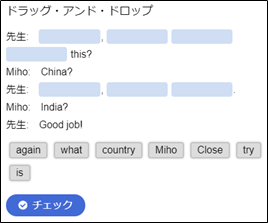
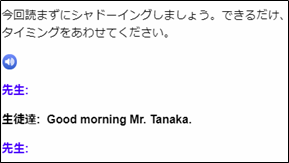
Some of the noteworthy features include animated videos with language in context, drag-and-drop interactive exercises, shadowing practice, and timed and recorded responses (see: Screen snapshots, below). Our greatest hope is that this app will be useful to teachers.


Screen snapshots
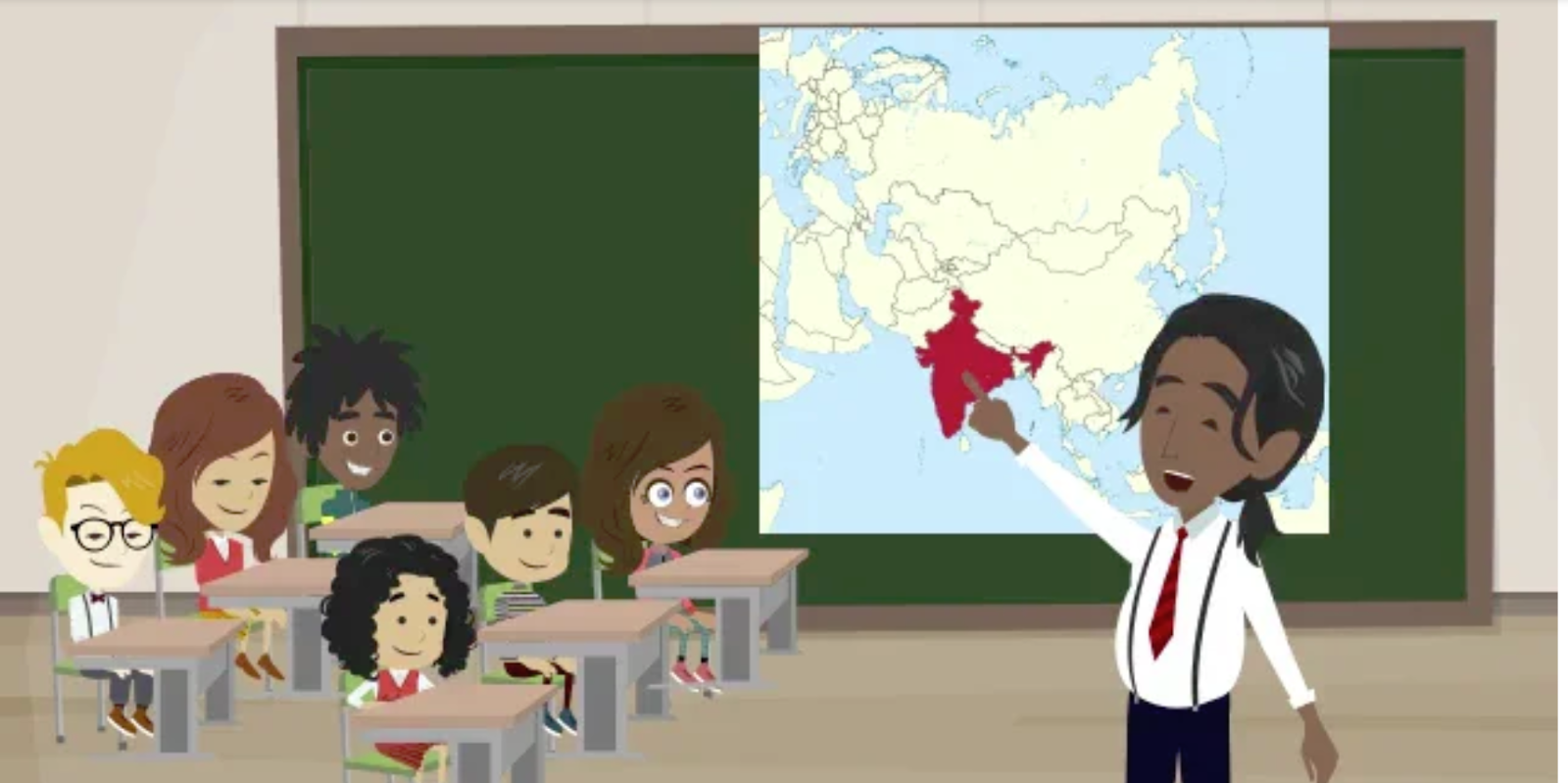
Animated videos
Drag-and-drop exercises
Shadowing practice
Timed and recorded responses


Project team members

Rob Hirschel
Jon Rowberry
Elton LaClare

About the author
Rob has had experience teaching English in elementary school, junior high school, university, and in specialized programs both in Japan and in the US. His research interests include computer-assisted language learning (CALL), vocabulary acquisition, and affective factors in the second language classroom.

Don't miss it!

Rob will be presenting the EIGO app. for elementary school English teachers at the PIGATE English language teacher development group's March Session:
  • Date: Saturday, March 9th, 2019
    • Starting at 13:30: Doors open at 13:00!
  • Venue: Seminar room 10, 5th floor,
    • Faculty of Administrative Studies office wing
    • The Prefectural University of Kumamoto (PUK)
Please see PIGATE Meeting Locations (https://goo.gl/h5DgbP) for site details and the PIGATE Calendar of Events (https://goo.gl/yEbVvo) for program details.

PIGATE_20190309

____________________
*With editorial embellishments by The PIGATE Blog administrator, Paul Beaufait

[534 words]

Friday, October 12, 2018

David Ockert's slides on Self-Determination Theory (SDT)

Many thanks to David Ockert for visiting Kumamoto in September and leading a workshop on SDT for PIGATE! He granted permission to publish his slides not long after the PIGATE newsletter went to print. There are 16 plain vanilla slides (line by line builds) in the Google slideshow below.


If you have comments or questions about any of the topics in his slides, or reflections on any of the tasks that David presented last month, please feel free either to spell them out in comments on this post, or to voice them at the next monthly PIGATE gathering–this coming Saturday, 13 October, 2018.

[105 words]

Tuesday, March 27, 2018

ASCD Express 9.02 - The Why, What, and When of Assessment

ASCD Express 9.02 - The Why, What, and When of Assessment (Tomlinson & Moon, 2013b)

That newsletter article caught my eye this morning in a list of website bookmarks after discussion at an English Café gathering yesterday, in which participants ... considered ... [among other topics]: 
  • Assessment practices in elementary school English-as-an-additional language learning activities slated to become mandatory coursework in the next few years (GU, n.d), and 
  • Roles of assistant or partner classroom teachers in occasional or routine team-teaching. 

The article is an adaptation of Tomlinson and Moon (2013a, pp. 19-21), in which the authors described assessment of, for, and as elements of differentiated instructionTomlinson and Moon argued for assessments to identify differences in: 
  • Individual learners' readiness to learn, 
  • Their individual interests or passions, and 
  • The learning modalities that individuals prefer (2013b, What to Assess, ¶1).

Tomlinson and Moon also outlined various types of assessment to use before, during, and after instructional units, namely: 
  • Pre-instructional assessments,
  • Formative or ongoing assessments, and
  • Summative assessments (2013b, When to Assess, ¶1).

The article concluded with examples of, and purposes for, combinations of formal and informal assessments. Regarding informal assessments in particular, Tomlinson and Moon asserted:
Informal assessments are useful in giving a teacher a sense of what makes a student tick, providing a big-picture look at how the class as a whole seems to be faring at a given moment, and amassing a growing sense of how specific students work in particular contexts (2013b, When to Assess, ¶2).
The first few examples of informal assessments that Tomlinson and Moon mentioned in their article resonated with remarks that the English Café convener made yesterday with regard to what a team teacher could do when not directly involved in instructional activities.


References


General Union [GU]. (n.d.). MEXT's 2018/2020 "New Course Of Study In Foreign Language Education" Plan. [Retrieved 27 March 2018 from] https://goo.gl/sBjXpo

Tomlinson, C. A., & Moon, T. R. (2013a). Assessment and Student Success in a Differentiated Classroom. Alexandria, VA: Association for Supervision and Curriculum Development.

Tomlinson, C. A., & Moon, T. R. (2013b). The why, what, and when of assessment. Assessment and Differentiation, 9(2). http://www.ascd.org/ascd-express/vol9/902-tomlinson.aspx

[365 [- 2 + 8] words]

Thursday, December 21, 2017

TESOL Electronic Village Online workshop for teachers of young learners

This post is to point out a free, five-week long, online workshop for teachers of young learners—one of many such offerings in TESOL International's Electronic Village Online (EVO) program for 2018.

Teaching EFL to Young Learners
Participants of Teaching EFL to Young Learners TEFL2YL EVO18 will learn about and create activities for English to Young Learners and Teens from around the world using storytelling, board games, action songs, and limited resource classroom activities. ...

Registration starts on [Jan 8, and the _program_ starts] Jan 14, 2018. 


If you have a yen for online networking and distance learning, and will have a bit of time to spare between mid-January and February next year, I highly recommend looking into this and other upcoming EVO workshops. 
[128 words {+6}]

Wednesday, September 13, 2017

Sesame Street: Alphabet Songs Compilation | Learn the ABCs!

At our gathering last Saturday, questions arose regarding how and when to help young English learners recognize, recall, and write letters of the alphabet.

For example, with regard to a presentation on dyslexia, participants wondered where the small letter D came from, and why it was so different from the big D.

Though I'll leave reporting details of the session to others who attended or presented, I would like to share a clue to the origin of the letter D:

Image source: Wikimedia Commons

I'd also like to point out a new video from Sesame Street (2017.09.08) offering musical alternatives to traditional ABC songs. Like most songs of this ilk, it focuses on capital letters.

What impressed me the most was the searchable transcript (lyrics) that you can display from the menu under the "..." button below the lower right corner of the YouTube video on site.

Select, "Open transcript," in the pop-up menu, then choose, "English - CC (English)," at the foot of the transcript window, for closed captions (rather than the auto-generated transcript).

Video source: Sesame Street's Back to School playlist

Below are a couple of snapshots of the transcript display with the timecode toggled either ON (at 00.01) or OFF (at 03:29 of 12:50). If you click on the images below, you can see details.

Alphabet Songs Compilation [+ transcript {00.01/12.50}]

Alphabet Songs Compilation [+ transcript {03.29/12.50}]
[255 words]

Monday, June 13, 2016

Nik's Learning Technology Blog: 20 + Things you can do with QR codes in your school

Those of you who've had an opportunity to peruse the slides in Social media for you and me (Beaufait & Terada, 2016.06.11) will have seen dozens of QR codes pointing out various online resources.

Here's another one:
http://goo.gl/pxDilp


It points to a 25 September 2015 post by Nik Peachey that tickled a strand in my Diigo social bookmarking network today: Nik's Learning Technology Blog: 20+ Things you can do with QR codes in your school

Nik's an English language teaching and technology guru that I met several years ago through a series of virtual workshops entitled Blogging for Beginners and Blogging for Educators. EdTechTalk is a Diigo group with which he shared that post 7 June 2016.

If you have any questions about QR codes or suggestions of other ways to use them around your schools, please do not hesitate to spell them out in comments on this post.
[150 words]

Friday, June 10, 2016

Twittering _for_ children (pab's first tweet)


Sounds good for adults, too, doesn't it?

Wednesday, April 22, 2015

Learning English the STELLAR way - Channel NewsAsia

Here's a bit of news about English teaching and learning in Singapore from 

I'd never heard of STELLAR before. How about you?

Are any of the activities the article mentions already in your teaching kit, or do they sound like they may be worth trying out (adopting and adapting)?

I'd love to read your thoughts about STELLAR practices in comments on this post!

[77 words]

Tuesday, March 3, 2015

JASELE and JES @ KGU: 4th English Education Seminar, 2015.03.14

The Japan Society of English Language Education (JASELE) and the Japan Association of English Teaching in Elementary Schools (JES) are jointly sponsoring a 4th English Education Seminar at KGU, Saturday, 14 March 2015. Please follow the link above for location, program, and registration details in Japanese.