Pages

Showing posts with label vocabulary. Show all posts

Tuesday, February 26, 2019

Introducing the EIGO app


Introducing the EIGO app

A guest post by Mr. Robert Hirschel*


About the app.

The Japanese Ministry of Education, Culture, Sports, Science and Technology (MEXT) has been promoting various English education initiatives to coincide with the Tokyo Olympics in 2020. New English curricula will see 5th and 6th grade elementary school students nationwide studying English as a mandatory subject with double the previous number of allocated classroom hours. Third and 4th grade students nationwide will study English as an ungraded foreign language activity. To be sure, many school districts and individual schools have already made significant increases in the provision of English education for their students.

Alongside these reforms, however, there is concern that many current and future elementary school teachers may lack sufficient proficiency and/or confidence to most effectively lead students in English language activities. Our app (see: Project team members, below) is an attempt to help teachers learn, practice, and become confident in speaking very basic classroom English language.

As we were already using the Moodle Learning Management System (LMS) at our institution, we decided to use this platform to create both a website and an app. We applied in 2014 for a MEXT grant and were awarded funds to begin our project in the following year. The process began with a needs analysis. We made observations at several elementary schools, recording and transcribing teachers’ use of Japanese and English. Based on analysis of this data and current teaching resources, we determined what language would be of greatest benefit to users of our app.

The next steps involved creating, piloting and revising content. Groups of teachers, administrators, and teachers-in training (PIGATE attendees included) provided us with valuable feedback that has influenced the final product. Several computer programmers have created and adapted plug-ins specifically for our app. There have been a lot of technical hurdles to overcome, too many to note here, but we are ultimately pleased with our product.

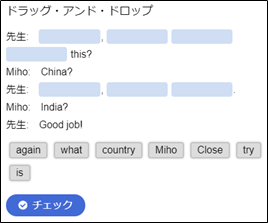
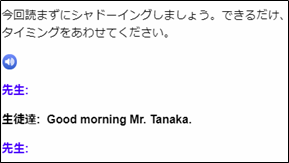
Some of the noteworthy features include animated videos with language in context, drag-and-drop interactive exercises, shadowing practice, and timed and recorded responses (see: Screen snapshots, below). Our greatest hope is that this app will be useful to teachers.


Screen snapshots
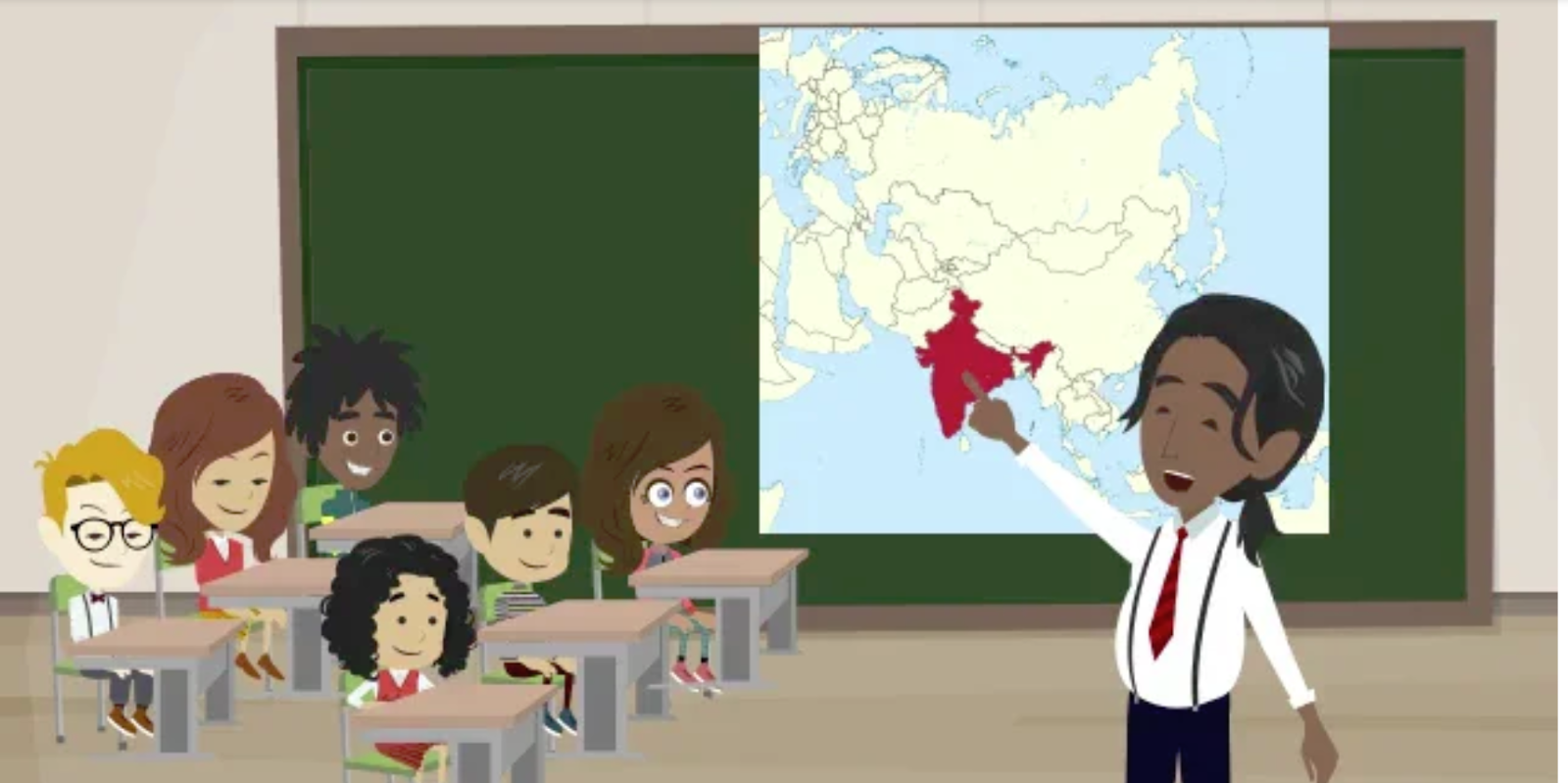
Animated videos
Drag-and-drop exercises
Shadowing practice
Timed and recorded responses


Project team members

Rob Hirschel
Jon Rowberry
Elton LaClare

About the author
Rob has had experience teaching English in elementary school, junior high school, university, and in specialized programs both in Japan and in the US. His research interests include computer-assisted language learning (CALL), vocabulary acquisition, and affective factors in the second language classroom.

Don't miss it!

Rob will be presenting the EIGO app. for elementary school English teachers at the PIGATE English language teacher development group's March Session:
  • Date: Saturday, March 9th, 2019
    • Starting at 13:30: Doors open at 13:00!
  • Venue: Seminar room 10, 5th floor,
    • Faculty of Administrative Studies office wing
    • The Prefectural University of Kumamoto (PUK)
Please see PIGATE Meeting Locations (https://goo.gl/h5DgbP) for site details and the PIGATE Calendar of Events (https://goo.gl/yEbVvo) for program details.

PIGATE_20190309

____________________
*With editorial embellishments by The PIGATE Blog administrator, Paul Beaufait

[534 words]

Monday, March 28, 2016

Did Ford.ca get your farther–further grammar goat?


Should Ford have used the word farther instead of further for promotional displays at the Women's World Curling Championships? They definitely needn't have capitalized the F-word in their tagline, and missed out sentence final punctuation as well.


Word-choice arguments, as you might imagine, can go full circle. For starters, an Oxford Dictionaries' grammar and usage resource made no distinctions, when talking about distance; it argued, "[B]oth are equally correct."

But isn't that like arguing two stones are equally close to the center of the house? If you watched the end of semi-final play between Japan and Russia yesterday (relative time), you may recall that the Japanese team quickly conceded a second point for closeness in the house on the 10th end, and won outright with two points of their own in the 11th.

Thus, perhaps, the Oxford Dictionaries' site conceded, "... [except] in various abstract and metaphorical contexts" (http://www.oxforddictionaries.com/words/farther-or-further).

Cambridge Dictionaries Online's argument included similar nuances: "There is no difference in meaning between them," when talking about distance. However, "[t]here are some occasions when we can use further[,] but not farther. / We use further before a noun to mean 'extra', 'additional' or 'a higher level'"
(http://dictionary.cambridge.org/us/grammar/british-grammar/farther-farthest-or-further-furthest).

The Canadian Oxford Dictionary Online called farther a "var[iant] of further …" (2005, inaccessible after first viewing), but wouldn't reveal the definition of further without a purchase or subscription. The definition of one word isn't much of a sample to preview, eh?

Grammar Girl surmised, "The quick and dirty tip is to use 'farther' for physical distance and 'further' for metaphorical, or figurative, distance. It's easy to remember because 'farther' has the word 'far' in it, and 'far' obviously relates to physical distance" (http://www.quickanddirtytips.com/education/grammar/further-versus-farther).

Grammar Monster concluded, "If you're unsure which to use[,] because it's difficult to make a distinction between physical and figurative distance, opt for further" (http://grammar-monster.com/easily_confused/further_farther.htm).

You don't think Ford marketeers were unsure, do you? 

[315 words]

Wednesday, March 2, 2016

Animal sounds galore!

Adaptation of Markham's Lexi the Poodle by pab (2016.03.02)
Some rights reserved (CC BY-SA 4.0)
A professor in Adelaide, Australia, Derek Abbott, has begun studying animal sounds as they would appear in comic strip speech balloons, according to posts in The Guardian and on the Mother Nature Network:
Both posts point to a website displaying Abbott's rather comprehensive collection of Animal Sounds, some transliterated into English from native language scripts. The MNN post also points to the video below featuring native speakers [of various languages] producing animal sounds.


Bow Wow Meow - Animal Sounds in Different Languages from Ke Nguyen on Vimeo.

Can you or, better yet, the learners you teach name all of the countries represented by flags in Nguyen's video?

[160 words {+3}]

Tuesday, December 15, 2015

The PIGATE Blog and kindred sites–rites of passage

It has been a remarkable and stimulating yet tumultuous year.

The JALT NanKyu Chapter's Blogger blog passed away on Dec. 5th at the early age of one year, two months, and 14 published posts. So I've removed its RSS feed from The PIGATE Blog sidebar and replaced it with a new RSS feed from JALT NanKyu's recently established website

That removal followed on the heels of a similar removal of the disused NanKyu Chapter's Google calendar from The PIGATE Blog Calendar of Events page display and its replacement with a generic Japanese holiday calendar feed.

Previously invisible in The PIGATE Blog sidebar, but now growing slowly, is a list of cross-links to Other PIGATE Favo(u)rites. There now are two links there to sites from which feeds don't seem to be available (8-(:
  1. PIGATE on Facebook (a closed group), and
  2. JALT NanKyu Chapter on Facebook (no longer a closed group).
If you have any other favo(u)rite sites that you'd like to share publicly on The PIGATE Blog, either as RSS feeds or cross-links, please shout them out in comments [on this post]–OR, better yet, volunteer to lend a hand in fostering The PIGATE Blog, which was a year and 33 published posts old on Sunday, Dec. 13!

[206 {+3} words]

Thursday, August 6, 2015

Tuesday, July 7, 2015

Shadowing for Improving Listening and Reading Skills (Fukushima & Lavin, 2013): A brief review

On June 13th, Mr. Taishi Kaneko (right) made his début as an emcee for guest speakers Mr. Hiroshi Fukushima (left) and Prof. Richard Lavin (center) at the PIGATE gathering in the KGU English Lounge. I hope we'll see and hear from them all again soon!
Mr. Kaneko introduced the guest speakers.

Along with a bit of historical and theoretical background, Mr. Fukushima and Prof. Lavin introduced two types of shadowing. The first focused learners' attention on the sounds of the target language, and the second focused on content–namely vocabulary, syntax (grammar) and meaning. 

PIGATE members had opportunities to try a little of both types. Then Mr. Fukushima reported on an on-going study to assess the effectiveness of shadowing relative to standardized test results. 


Prof. Takaki summed up the session.

Below are a couple of books on shadowing (Kadota, 2007, and Tamai, 2005) highlighted either in the presentation itself or in Prof. Takaki's summary. The other (Kadota, 2012), which I discovered today at Amazon, JP, appears to be a follow-up on the first.

  • Kadota, Shuuhei. (2007). シャドーイングと音読の科学 [shadouingu to ondoku no kagaku: the science of shadowing and reading aloud]. Tokyo, JP: Cosmopia.
  • Kadota, Shuuhei. (2012). シャドーイング・音読と英語習得の科学 [shadouingu, ondoku to eigo shutoku no kagaku: the science of shadowing, reading aloud and English acquisition]. Tokyo, JP: Cosmopia.
  • Tamai, Ken. (2005). リスニング指導法としてのシャドーイングの効果に関する研究 [risuningu shidouhou toshite no shadouingu no kouka ni kan suru kenkyuu: a study of the effects of shadowing as a method for teaching listening]. Tokyo, JP: Kazama Shobou.


Though there seemed to be a general consensus among audience members about the potential of shadowing for dedicated individual language learners, a question remained about how teachers might adopt and adapt such practices for general classroom instructional purposes.

If you have other key readings to suggest, other questions about shadowing, or suggestions regarding shadowing and classroom teaching practices in particular, please feel free to spell them out in comments on this post.

Monday, February 16, 2015

"Special for" v. "special to": 3 to 6 or 16 to 14?

On a quick break between a family emergency and tests, I ran a few searches on the Compleat LexTutor site for phrases that someone had asked about at the PIGATE gathering on Sat., Feb. 14.

In a mega corpus of approx. 3 million words, here's what I found:
The mega corpus is approx. 2/3 British National Corpus (BNC: written + spoken).


A couple of bigger, slower searches of the BNC plus the larger Corpus of Contemporary American English (COCA), approx. 14 million words in all, gave different results:

  • "Special" with "for" within a few words and words that repeat 1 word to the right of special:
    • for=16, interest=3, provisions=3, time=3, ...
  • "Special" with "to" within a few words and words that repeat 1 word to the right of special
    • to=14, interest=11, issue=10, attention=6, access=3, effort=3, permission=3, prosecutor=3, reference=3, way=3, ...

Though convenient findings like these may be inconclusive, since they don't directly compare the BNC to the COCA, perhaps the author of the textbook passage in question was inclined toward British usage. [As I recall, the next word after "for" or "to" was a pronoun ("special * her"?). Anyone keen to dig into that?]

[243 words]

Sunday, February 15, 2015

Grammar Monster

Looking for a site to point out to a student who had waited almost a year to inform me that (s)he didn't know what "title case" meant, I found Grammar Monster with a quick web search. Interestingly enough, the lesson page topped the glossary page for title case in the search and in ease of understanding.

The main entry began with a Quick Answer, and then a brief explanation that used a few words like articles and prepositions. Learners at first might want but not need explanations, because the both the lesson and glossary pages for title case gave examples of those parts of speech. 

The explanation on the lesson page could be simpler than it is, so I sent these suggestions to the site owner: "When writing a name or a title, it is . . . common . . . to . . . use capital letters [only] to start the . . . [main] words." (2015.02.15). Following the brief explanation, there were plenty of annotated examples of titles in title case–plus more notes in a sidebar to the right.

The site itself features five pages in a navigation bar on the home page:
  1. Common Grammar Errors
  2. Easily Confused Words
  3. Free Grammar Tests,
  4. Grammatical Terms
  5. Punctuation Lessons.
Grammar Monster also has a search page with cross-links to the most popular pages on site. So the site may be quite useful. That is, if you know what to look for, and if you are able to ignore the ads here and there, and the video clips playing over and over in the side bar.


[271 words]

Friday, February 13, 2015

Muppets Treasure Island - Cabin Fever

The Cabin Fever song from a 1996 Muppet movie is based on a classic adventure novel by Robert Louis Stevenson (Wikipedia, 2015, ¶1). The song has been burning inside my head for the past several days. So I decided to find a video clip that I could share here.


This song has been memorable not only because I love the Muppets, but also because the ship-board setting for the song in the video (Baker, 1996) contrasted so vividly with a snow-bound mountain cabin image that I've held from childhood adventures–including reading!

That is, my image related to the second definition of the noun (n.) cabin in WordNet 3.1, and the Muppet movie scene represented the first. As far as collocations go, "cabin fever" may not occur very frequently outside this song. Nevertheless, you may find it catching.

Doing a bit more browsing around the topic of cabin fever, I think I may have found a remedy, namely getting out and communing with nature (Berman, Jonides & Kaplan, 2008). Perhaps that's what I should be doing now, instead of planning another post!

References


Baker, Martin G., & Henson, Brian (Producers), & Henson, Brian (Director). (1996). Muppet treasure island [Motion picture]. United States: Jim Henson Productions.

Berman, M. G., Jonides, J., & Kaplan, S. (2008). The Cognitive Benefits of Interacting with Nature. Psychological Science, 19(12), 1207–1212. doi:10.1111/j.1467-9280.2008.02225.x

Wikipedia. (2015, February 11). Muppet Cabin Fever. Retrieved from http://en.wikipedia.org/wiki/Muppet_Treasure_Island


[241 words]

Friday, February 6, 2015

Feb 2015 PIGATE meeting: Teaching English in English: Grammar, Vocabulary and Extensive Reading in an All-English Classroom

The February meeting will be at Kumamoto Gakuen University (KGU) on Sat., 14 February, from 13:30-17:00, on the first floor of Building 11, in the English Lounge.

Rob Peacock of Oxford University Press will on speak about Teaching English in English: Grammar, Vocabulary, and Extensive Reading, in an All-English Classroom.

Rob wrote (5 Feb 2015):
In this session, we will look at some practical ways to teach all-English classes to elementary, junior and senior high school students in Japan. We will start by brainstorming some methods of introducing classroom English, before dealing with the practicalities of teaching grammar and vocabulary without using translation. Finally, we will review the benefits of introducing an extensive reading program.
Rob currently works for Oxford University Press, and is an Oxford Teachers' Academy certified teacher trainer. He has spent many years in Japan, teaching students of all ages, as well as providing teacher support through workshops.

Hope you can join us!