Pages

Showing posts with label young learners. Show all posts

Monday, August 16, 2021

Developing phonemic awareness: A follow-up on PIGATE's Special Summer Session, Sat. Aug. 14th

During PIGATE's online gathering on Saturday, Aug. 14, 2021, participants explained (showed, and told of) a number of their favorite resources and practical techniques for exploiting songs and stories with language learners. Participants' accounts related to various activities with preschool children and early school-aged (elementary and junior high school) English-as-an-additional language learners in particular.

To those inspiring accounts, which I hope you can review via Zoom meeting recordings,  chat transcripts, and other short reports about PIGATE's August gathering, I'd like to add a pointer to a separate webinar recording. That webinar, from the iDTi 2015 Summer Intensive for Teachers, is about ways of developing learners' phonemic awareness, "necessary prerequisites for studying and reading in English" (idDTi Videos, 2021.08.12, description, ¶2).

About 18 minutes into that webinar recording, Karen Frazier Tsai asserted:


"[W]e need to start first with making our children phonemically aware of the sounds in English, those sounds that are different from whatever their first language is." 

(auto-generated YouTube video transcript, 17:23–17:35)


She then asked and answered the questions: "[W]hat do we do; how do we start … to make them have that skill of really focusing in on the sounds" (transcript, 18:21–18:28, ff.). In sum, Tsai explained various ways of helping learners become aware of sounds, rhymes, and syllables by playing with words in a new language. Whether you're teaching pre-reading to young learners, or simply reading stories to children, I highly recommend watching the webinar recording from beginning to end!


Children Playing with Words
(iTDi Videos, 2021.08.12)

Reference

iTDi Videos. (2021.08.12). Children Playing with Words (Karen Frazier Tsai) [video recording]. https://youtu.be/Br10cHS-5Qk


Tuesday, February 26, 2019

Introducing the EIGO app


Introducing the EIGO app

A guest post by Mr. Robert Hirschel*


About the app.

The Japanese Ministry of Education, Culture, Sports, Science and Technology (MEXT) has been promoting various English education initiatives to coincide with the Tokyo Olympics in 2020. New English curricula will see 5th and 6th grade elementary school students nationwide studying English as a mandatory subject with double the previous number of allocated classroom hours. Third and 4th grade students nationwide will study English as an ungraded foreign language activity. To be sure, many school districts and individual schools have already made significant increases in the provision of English education for their students.

Alongside these reforms, however, there is concern that many current and future elementary school teachers may lack sufficient proficiency and/or confidence to most effectively lead students in English language activities. Our app (see: Project team members, below) is an attempt to help teachers learn, practice, and become confident in speaking very basic classroom English language.

As we were already using the Moodle Learning Management System (LMS) at our institution, we decided to use this platform to create both a website and an app. We applied in 2014 for a MEXT grant and were awarded funds to begin our project in the following year. The process began with a needs analysis. We made observations at several elementary schools, recording and transcribing teachers’ use of Japanese and English. Based on analysis of this data and current teaching resources, we determined what language would be of greatest benefit to users of our app.

The next steps involved creating, piloting and revising content. Groups of teachers, administrators, and teachers-in training (PIGATE attendees included) provided us with valuable feedback that has influenced the final product. Several computer programmers have created and adapted plug-ins specifically for our app. There have been a lot of technical hurdles to overcome, too many to note here, but we are ultimately pleased with our product.

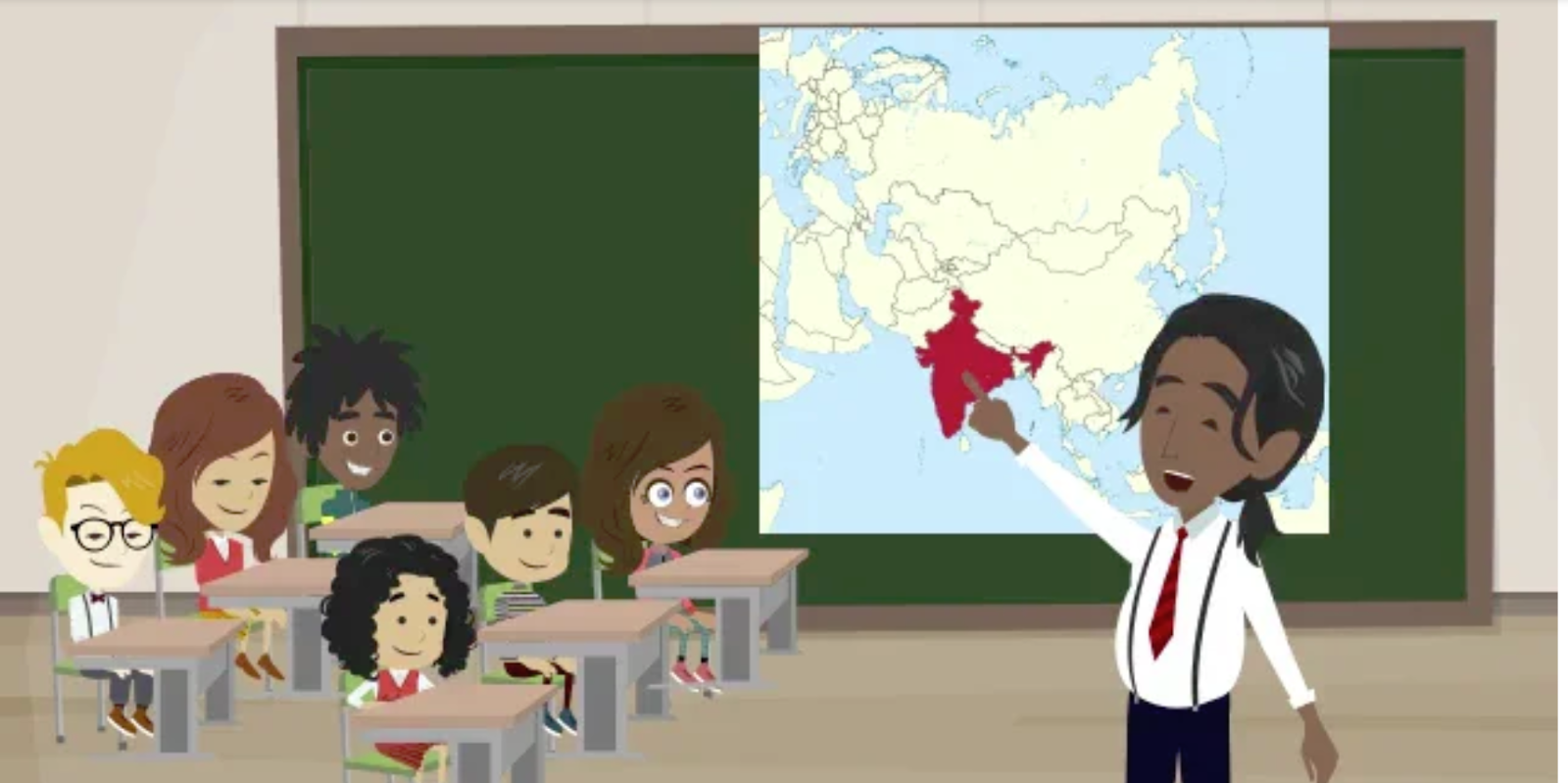
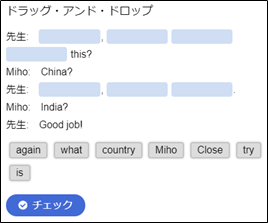
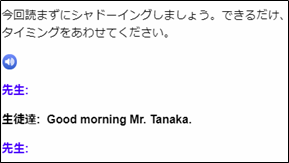
Some of the noteworthy features include animated videos with language in context, drag-and-drop interactive exercises, shadowing practice, and timed and recorded responses (see: Screen snapshots, below). Our greatest hope is that this app will be useful to teachers.


Screen snapshots

Animated videos
Drag-and-drop exercises
Shadowing practice
Timed and recorded responses


Project team members

Rob Hirschel
Jon Rowberry
Elton LaClare

About the author
Rob has had experience teaching English in elementary school, junior high school, university, and in specialized programs both in Japan and in the US. His research interests include computer-assisted language learning (CALL), vocabulary acquisition, and affective factors in the second language classroom.

Don't miss it!

Rob will be presenting the EIGO app. for elementary school English teachers at the PIGATE English language teacher development group's March Session:
  • Date: Saturday, March 9th, 2019
    • Starting at 13:30: Doors open at 13:00!
  • Venue: Seminar room 10, 5th floor,
    • Faculty of Administrative Studies office wing
    • The Prefectural University of Kumamoto (PUK)
Please see PIGATE Meeting Locations (https://goo.gl/h5DgbP) for site details and the PIGATE Calendar of Events (https://goo.gl/yEbVvo) for program details.

PIGATE_20190309

____________________
*With editorial embellishments by The PIGATE Blog administrator, Paul Beaufait

[534 words]

Monday, January 14, 2019

The Common Sense Media website: Goodies for parents and educators

Last Saturday, at a monthly gathering (2019.01.12), I mentioned a blog post I'd read recently:


In that post, one of the main points that Caroline Knorr (2019), Common Sense Media's parenting editor, made was that technological interventions work best in conjunction with ongoing conversations with young learners.

That post is just one of the Must Read items displayed in the For Parents section of the Common Sense Media website, which you can personalize to suit your family or the ages of students you teach.

There also is a For Educators section of the website that is worth exploring for additional age-appropriate recommendations and resources as well.

References


[176 words]

Thursday, November 22, 2018

Humanizing screen time

Here is @kaiasays spending lazy summer time on precious #screentime on her new iPod touch.
Photo by Jabiz Raisdana, 2013.07.18, 
Some rights reserved (CC BY-NC 2.0)

In a recent post on The Principal of Change blog, George Couros highlighted recommendations for children's screen time (AAP, 2018.05.01), and posed three questions to frame thinking about ways to use technology both at home and at school:
When we look at how we are using technology, we have to ask:
  1. Is the way we are using technology building connections or severing them?
  2. Is this fostering deep learning as well as critical thought and creation, or promoting surface level thinking?
  3. Are we modeling our learning, balance, and human connection through our use of technology so we can effectively guide our students?

[120 words]

Friday, October 12, 2018

David Ockert's slides on Self-Determination Theory (SDT)

Many thanks to David Ockert for visiting Kumamoto in September and leading a workshop on SDT for PIGATE! He granted permission to publish his slides not long after the PIGATE newsletter went to print. There are 16 plain vanilla slides (line by line builds) in the Google slideshow below.


If you have comments or questions about any of the topics in his slides, or reflections on any of the tasks that David presented last month, please feel free either to spell them out in comments on this post, or to voice them at the next monthly PIGATE gathering–this coming Saturday, 13 October, 2018.

[105 words]

Monday, September 3, 2018

Coming soon: Self-determination theory—for young learners and the young at heart!


Creating and implementing interactive tasks based on self-determination theory—for young learners and the young at heart!

By David Ockert, Toyo University


David Ockert’s teaching interests are in critical thinking, reading comprehension, and academic writing. He does research on the influence of technology on affective variables (motivation, confidence, anxiety, and willingness to communicate). 

David also enjoys creative lesson planning for communicative purposes, using a task-based language teaching (TBLT) approach via the three pillars of self-determination theory [SDT]: competence (mastery), relatedness, and autonomy. 


For this presentation, David will focus on self-determination theory-based EFL motives interconnected with competence, relatedness, and autonomy. He will show how all three can be incorporated easily into any level of pedagogy, with a focus on the junior high school level in Japan.

[UPDATE, 2018.09.10: This presentation will be a participatory event with very little lecture. David will lead participants through hands-on tasks, with evaluation of each afterwards, to provide a real-world experience of how and why SDT-based lessons work.]


Date & time

Saturday, September 15, 2018; 13:30–16:30

Venue

Seminar room 10, Faculty of Administrative Studies office wing, Prefectural University of Kumamoto (PUK): Please see PIGATE Meeting Locations (https://goo.gl/h5DgbP) for details.

Attendance plans

Hoping or planning to attend? Please let us know by filling out an attendance form: 
If you'd also like to attend an informal networking event afterwards (tentatively 18:30–20:30), please ... add, "Post-function: Yes!" (without quotation marks) along with your email address as Additional info. at the end of the form [2018.09.13: ... ask Paul in person on Saturday whether a seat is still available].
[227 {+ 50} words]

Wednesday, November 1, 2017

Teachers' resource book in the KGU library

One of the last times we met in the KGU library, the title on the spine of a book (Shin & Crandall, 2014) caught my eye. So I pulled it out to take a peek. It's in the syllabus corner on the first floor: 

KGU OPAC catalog listing (English)
KGU OPAC catalog listing (Japanese)
Here's a preview of the table of contents:

  • Preface
  • About the Authors
  • Chapter 1: Teaching English to Young learners around the World: An Introduction
  • Chapter 2: Basic Principles of Teaching English to Young Learners (TEYL)
  • Chapter 3: Contextualizing Instruction: Creating Thematic Units and Lesson Plans
  • Chapter 4: Teaching Listening and Speaking
  • Chapter 5: Teaching Reading and Writing
  • Chapter 6: Storytelling
  • Chapter 7: Assessment
  • Chapter 8: Classroom Management
  • Chapter 9: Twenty-First-Century Skills in Teaching English to Young Learners (TEYL)
  • Chapter 10: Professional Development
  • Worksheets
  • Index
(Source: National Geographic Learning, English Language Teaching, 
Product Information, More, Table of Contents, 
retrieved 2017.11.01)

Would you like to have a go at reviewing it for a future newsletter? If so, please send us a heads-up either in a comment on this post or in a message to our Google Group.


Reference

Shin, J. K, & Crandall, J. (2014). Teaching Young Learners English: From Theory to Practice. Boston, MA: National Geographic Learning.

[211 words]

Wednesday, September 13, 2017

Sesame Street: Alphabet Songs Compilation | Learn the ABCs!

At our gathering last Saturday, questions arose regarding how and when to help young English learners recognize, recall, and write letters of the alphabet.

For example, with regard to a presentation on dyslexia, participants wondered where the small letter D came from, and why it was so different from the big D.

Though I'll leave reporting details of the session to others who attended or presented, I would like to share a clue to the origin of the letter D:

Image source: Wikimedia Commons

I'd also like to point out a new video from Sesame Street (2017.09.08) offering musical alternatives to traditional ABC songs. Like most songs of this ilk, it focuses on capital letters.

What impressed me the most was the searchable transcript (lyrics) that you can display from the menu under the "..." button below the lower right corner of the YouTube video on site.

Select, "Open transcript," in the pop-up menu, then choose, "English - CC (English)," at the foot of the transcript window, for closed captions (rather than the auto-generated transcript).

Video source: Sesame Street's Back to School playlist

Below are a couple of snapshots of the transcript display with the timecode toggled either ON (at 00.01) or OFF (at 03:29 of 12:50). If you click on the images below, you can see details.

Alphabet Songs Compilation [+ transcript {00.01/12.50}]

Alphabet Songs Compilation [+ transcript {03.29/12.50}]
[255 words]

Monday, July 17, 2017

Monthly special topic: Summer vacation homework

夏休みの宿題

Summer homework, to the best of my recollection, wasn't a big thing way back when I was growing up in Missoula, MT, half a century or so ago. As a matter of fact, the concepts of homework (school work) and vacation—"freedom or release" from school (Dictionary.com, vacation, definition 3), still seem diametrically opposed. Air-conditioning wasn't a big thing in many places, either.

Reading, however, was a big thing, at least in my family. Visits to the public library downtown were, generally speaking, a weekly affair. During the summer they may have been even more frequent.

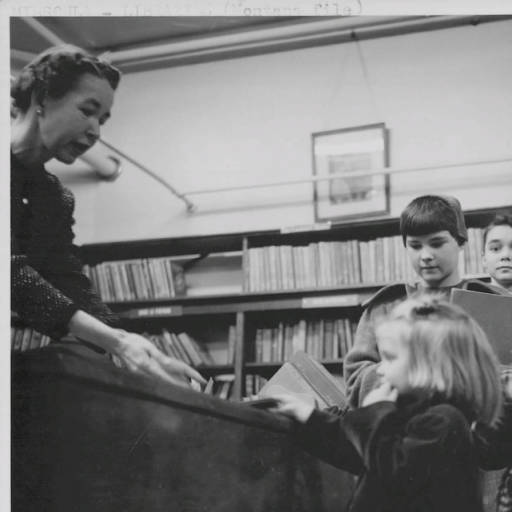
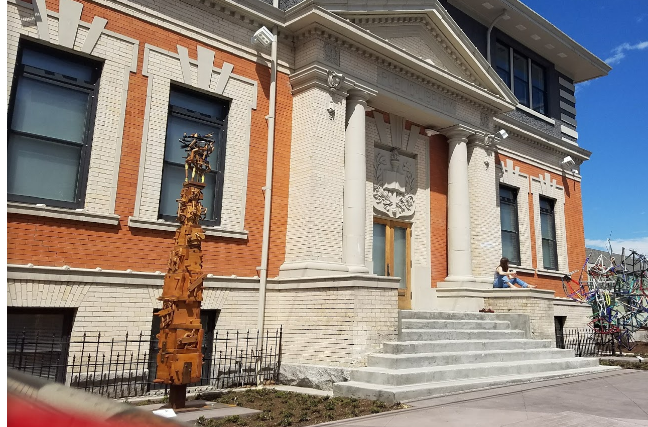
Though the archive photo below predates my childhood reading career by a few years, and the children's coats (and the date stamped on on the back of the photo) suggest a colder season, the Children's room was in the basement of a Carnegie grant-funded library building. That basement remained pleasantly cool throughout the summer!

Children and books at the Missoula Public Library (1956)
Image source: Montana Memory Project (https://goo.gl/QHH82m)

As I recall, there were story hours once a week, and children could get library cards as soon as they could sign their namesin cursive not printed script. However, the one book per child checkout limit proved irksome.

Once I'd gotten hooked on reading, one of my parents had to check out extra books to get us through the week. It wasn't too long before they had to persuade the librarian to let me check out books from the upper-elementary school stacks.

The old library building now is home to the Missoula Art Museum (http://www.missoulaartmuseum.org/), which offers a wide-range of art experiences for children (https://goo.gl/oQonjP).

Missoula Art Museum (Google).PNG
Missoula Art Museum, 335 N. Pattee St., Missoula, MT
Image source: Corey McClure (May 2017), Google Maps (https://goo.gl/VbEbea)


[295 words]

Tuesday, May 16, 2017

Skidamarink: Super Simple Songs & Wee Sing YouTube videos

Skidamarink is one of the songs for young learners that Mr. Takaki introduced during the PIGATE gathering on ... [May] 13. Here are a couple videos of the song from the Super Simple Songs and Wee Sing YouTube channels.


If you use songs and gestures like that with young children or older learners, please shout out in comments on this post to let us know what your favorites are and how you use them.

[77 words]

Wednesday, April 6, 2016

Flashback: Introducing Hap Palmer to Japan (Yoneoka, 2015.01.09)

This post is a follow on to Prof. Judy Yoneoka's guest speaker presentation last January (2016.01.09). The converted slideshow below includes active links to numerous musical resources that she used to demonstrate classroom activities.

As a newsletter write-up explained:
[She] is a professor in the Department of English and American studies at Kumamoto Gakuen University. Her major research theme is world Englishes.
(PIGATE Newsletter, 268, p. 4)


Introducing Hap Palmer to Japan (Yoneoka, 2015.01.09 [converted])


A few additional musical resources are listed in a previous post, along with a call for more resource suggestions: Music for children: Online resources (2016.01.22).

[100 words]

Wednesday, March 2, 2016

Animal sounds galore!

Adaptation of Markham's Lexi the Poodle by pab (2016.03.02)
Some rights reserved (CC BY-SA 4.0)
A professor in Adelaide, Australia, Derek Abbott, has begun studying animal sounds as they would appear in comic strip speech balloons, according to posts in The Guardian and on the Mother Nature Network:
Both posts point to a website displaying Abbott's rather comprehensive collection of Animal Sounds, some transliterated into English from native language scripts. The MNN post also points to the video below featuring native speakers [of various languages] producing animal sounds.


Bow Wow Meow - Animal Sounds in Different Languages from Ke Nguyen on Vimeo.

Can you or, better yet, the learners you teach name all of the countries represented by flags in Nguyen's video?

[160 words {+3}]

Friday, January 22, 2016

Music for children: Online resources

Image source: Pixabay
Creative Commons CC0

At present, this post is a work in progress inspired by Prof. Yoneoka's presentation of Hap Palmer's music for children at the PIGATE gathering 9 January 2016. 

The songs Prof. Yoneoka played and the activities she led to accompany them reminded me of another musician I'd met years ago in British Columbia, Canada, named Matt Maxwell.

Sort of like Santa, I'm making a list and checking it twice. It would be a pleasure to hear of other resources like these:


...

If you know of any similar resources, please spell them out in comments on this post, and I'll be happy to look them up and add them to this growing list.

Tuesday, January 13, 2015

New Year's resolution worksheets

Looking for a worksheet that you might adopt and adapt for collecting New Year's resolutions, or one simply to serve as inspiration for various sorts of resolutions–if not this year, then maybe next? Check this one out!
Image source: http://blogs.scholastic.com/files/resolution-1.pdf
You'll find a couple more if you read on.